March 4, 2015

Savanna Ecosystem Volunteer - Conservation Jobs

Savanna Ecosystem Volunteer - Conservation Jobs
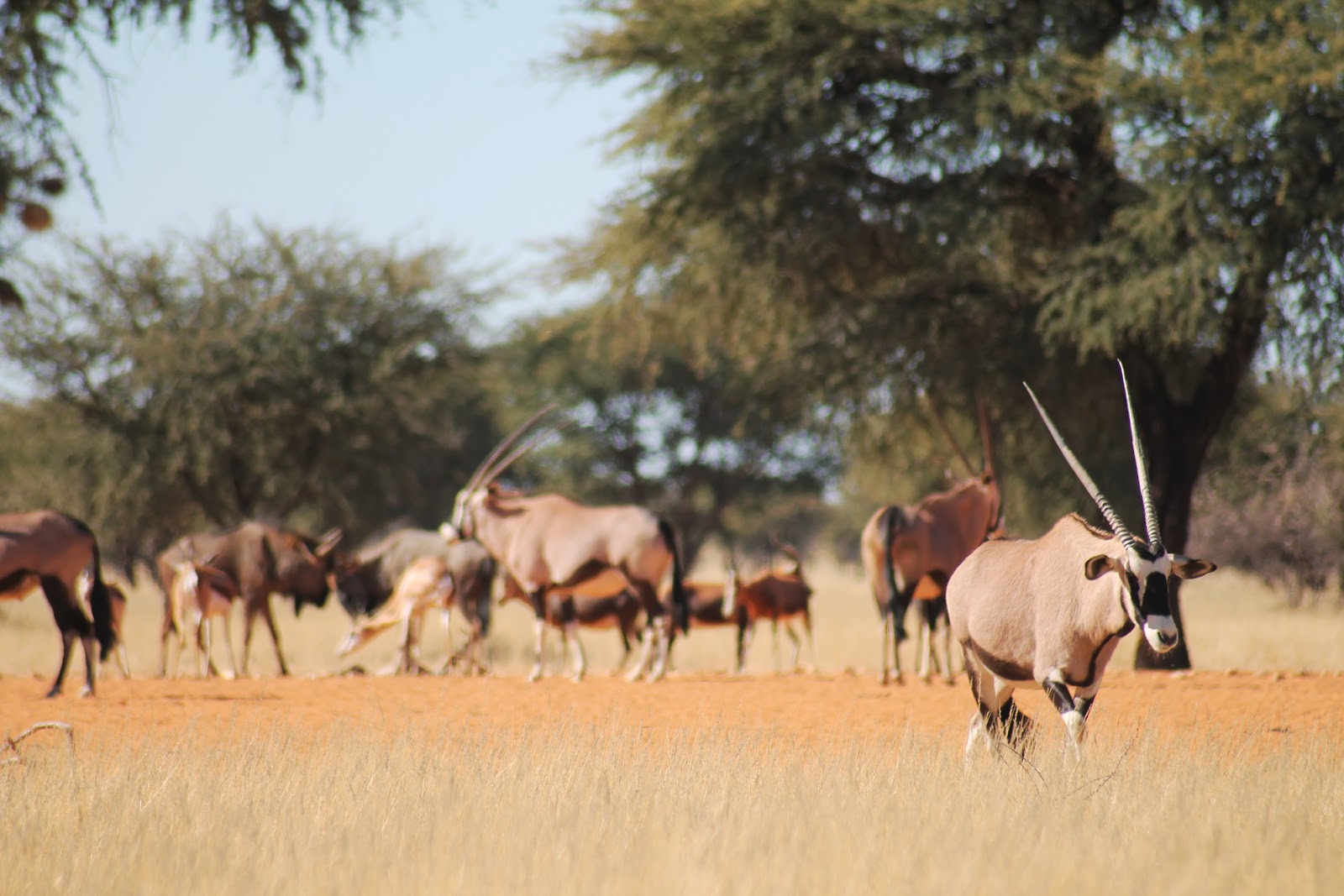
 Experts in ecology, rangeland management and education science, we offer various programmes in wildlife ecology, conservation and community work in the Kalahari Desert Namibia - one of the last wilderness regions in the world.


Volunteer in field ecology

Arid rangelands worldwide are adversely affected by high levels of human intervention and high climatic variability. In Southern Africa unsustainable and intensified lifestock management together with climatic variability during the last decades often led to desertification with subsequent losses in ecosystem function and services.
We are investigating representative components of functional change in vegetation and the alteration in faunal community composition as a result of grazing, fire and rain. In order to understand underlying mechanisms of observed differences, we use herbivore exclusion sites, manipulating plots with fire, rain and grazing and use insect species to study faunal species compostional changes.

Volunteer in community work

At our local research stations we endeavor to also contribute to the local community and children. Do you enjoy being around children, would like to learn about a new culture and feel the urge help in community work?
Be a volunteer with us and help us establish local kindergardens, learning and activity centres for local children between the ages from 1 – 7 years old. at our research stations in the Kalahari, within the African wilderness, among a rich wildlife setting.

Volunteer in wildlife conservation

Get active helping to protect endangered species of the Kalahari Desert Namibia. We regularily need to monitor animals and perform wildlife counts, inculding searching animals at night. We also need to analyse large datasets and raise public awareness via presentations and report writing.
 

September 28, 2014

Grazing impact on wildlife, Namibia

Current research at BRinK Namibia investigates the grazing impact of wildlife together with bushfire and rain on biodiversity using beetles as an indicator group.

Using an ecological experimental set-up with herbivore exclusion sites, we deliberately burn vegetation, wet and clip subplots, as well as remove litter, all factors considered important for beetle biodiversity patterns.

Here we have last weeks plots burned, hopefully mimicking real Kalahari bushfires!


May 7, 2014

Technology in Camp

Finally we have solar electricity installed in camp. No problems anymore charging computers and cellphones. With electricity, we also don´t need to climb up the trees or throw the phone in the air anymore in order to receive sms. We also used to hang up the phones in the trees during the day and those lucky ones who had messages from their loved ones in the evenings!
No hopes needed any longer as with electricity we even have the chance to get internet. Good old times, where we were cut off the world are over (not completely, as we still living in the wild). However, as a researcher, we are highly dependent on the battery power of a computer, as doing scientific analysis on a piece of paper is not taught in universities anymore. A scientist is as good as his computer, right?

BRinK LINK


September 8, 2013

From the lab to the field...

Fritz grew up in Africa among vast diversity of wildlife. As a kid, he enjoyed collecting beetles, looking into ardvark holes and following ant trails. Not suprisingly he studied biology, however, he did not become an ecologist. Instead, he drifted into microbiology, fascinated by the small stuff.

Now he did his PhD in microbiology, but his heart longs for Africa, his soul lies among African wildlife and the outdoors.

In his thesis, Fritz used the beetles found on the reserve in Namibia, in order to exemplify the beauty of diversity at all levels, including in bacteria (image below).
 
The wildlife reserve Kuzikus, where Fritz grew up, runs a breeding programme for the critically endangered black rhino. Recently a calf needed to be bottle-fed and raised near the farm house. A goat kept company and became the rhinos best friend.

Fritz wanted to raise awareness and attention at his university among laboratory-dwelling microbiologists: News on goats, rhinos and bacteria


Meanwhile, Fritz is heavily involved in helping to establish an ecological research station at Kuzikus, BRinK.


August 21, 2013

Field Biology in Namibia 2014

Heavy grazing by domestic lifestock leading to shrub encroachment is a major form of savanna rangeland degradation. The consequences often result in reduced structural and species diversity and displaced species interactions that cause cascading effects on trophic levels.

 Students help in surveys in this important project and cover various aspects of savanna ecology and methodology in the field, including dealing with an experimental set-up in field ecology as well as estimating abundances of wildlife (census).

To make the most of your time you will have the opportunity to be out in the field every day for data collection. During field trips, we will mainly be on the wildlife reserve, having wild animals roaming around us while we collect data on plants or animals. You will also get to see how cattle is managed on arid farmland and understand the differences between wildlife and cattle ranching in Southern Africa.

Kuzikus, the wildlife reserve, where we are based, is home to many native African ungulates and our research camp is situated within the Kalahari wilderness.

Join our team for the summer 2014 


July 19, 2011

New Projects 2012!

Get involved with BRinK research on various taxonomic groups in 2012. We are looking forward to your applications. 

January/February 2012 (23.01 - 17.02): Small mammal trapping

March/April 2012 (26.03 - 20.04): Bird predation and athropod abundance

May 2012 (30.04 - 25.05): Large mammal census using distance sampling 

July 2012 (02.07 - 27.07): Black rhino monitoring and behaviour


 Aardvark spotted in Kuzikus yesterday!

June 14, 2011

New Projects in 2011

Dear Students,

There are two new, exciting projects for you to join.

The bird ecology project in September studies bird abundance, species and distribution in the wild.
Apart from an amazing wildlife experience, you will learn
  • to use wildlife sound recording methods, 
  • to identifiy 140 species of bird by their call and sighting
  • to understand the technique of distance sampling for a densitiy estimation. 
Application deadline for birds is 01 August 2011 - apply now!


The black rhino conservation project in November implements an innovative monitoring method using animal footprints with the help of a computer software and local bushmen trackers.
Apart  from the unique opportunity to spot on one the most endangered megaherbivore in the world, you will learn
  • how to track black rhinos (Diceros bicornis bicornis) in the wild
  • to use a new monitoring method for endangerd species (WildTrack)
  • about real-time wildlife conservation in Africa
Appication deadine for black rhinos is 01 September 2011 - apply now!

February 25, 2011

Meet the BRinK-Team

Dear all,
As a Kuzikus guest, volunteer or research scientist, you have the opportunity to meet up with us - we might just be next door until March 2011....

UK
Plymouth - 02.02 - 27.02 - email for appointment: alison.skeats@brink-namibia.com

Germany

Munich - 24. 02 until 28. 02 - FREE München - Halle A4 Stand 310

Switzerland
Lausanne - 23.01 until 28.02 - email for appointment: friedrich.reinhard@unil.ch

US
Durham, North Carolina - 23.01 until 28.02 - email for appointment: j.e.reinhard@brink-namibia.com

February 17, 2011

Apply for exceptional insect expedition

Dear Volunteers,

440mm of rain - imagine what this means for life in the Kalahari Desert - it is thriving!

The timing for our entomological expedition is thus perfect! We are convinced we will find a couple of new species over there. It is truly a unique opportunity for researchers to come and visit Kuzikus now, collect data in an exceptional environment. In fact, we will have professional entomologists on site, a perfect opportunity for students to gain insights into field entomology and get in touch with the experts.

We would love to hear from you (see link)! Closing date is soon, so apply soon to get organised for a great adventure :-)

Best wishes,
Your BRinK-Team

February 3, 2011

Water in the Kalahari

"Schakalposten"

 "Schweineposten"

Your BRinK-Team

PS: Meet us in Hamburg/Germany and Reading University/UK this week! (see older post)

February 2, 2011

Arrival of Storks

Over 350mm rain already, more than we expect in a year in this area. The pans are filled and lakes are everywhere. The vegetation is thriving and hundreds of black storks have arrived.....

This photo was taken from the Lapa at Kuzikus Lodge.

Your BRinK -Team

PS: Don't forget to meet up with us in Europe or US, we are around to inform you about Kuzikus and BRinK (see older posts).

January 26, 2011

Flamingos in Kuzikus

Over 70mm rain in one day and the first Flamingo in thirty years! This is evidence of how variable our Kalahari Desert can be - a true paradise.

Kuzikus presents a regional hotspot, especially for wading birds, due to its open water sources (on the picture: pan "Ochsenposten"). This is probably why we have special encounters like these sometimes. We hope to welcome you on Kuzikus soon (again) to share amazing moments like these.

Your BRinK-Team

PS: Don't forget to come and see us to learn more about BRinK, since we are visiting the UK, Switzerland, Germany and US. See last post.

January 21, 2011

Meet us personally

Dear all,
As a Kuzikus guest, volunteer or research scientist, you have the opportunity to meet up with us - we might just be next door until March 2011....

UK


Plymouth - 02.02 - 27.02 - email for appointment: alison.skeats@brink-namibia.com

Germany


Munich - 24. 02 until 28. 02 - FREE München - Halle A4 Stand 310

Switzerland

Lausanne - 23.01 until 28.02 - email for appointment: friedrich.reinhard@unil.ch

US
Durham, North Carolina - 23.01 until 28.02 - email for appointment: j.e.reinhard@brink-namibia.com

January 4, 2011

Happy 2011

We are lucky with the rain again - the vegetation is lush, the animals are doing so well. Even the Eland (T. oryx) are very well off with five new calves. We observed them New Years Eve by the water and it is just wonderful!
We wish the best of luck and success for the year 2011 to all of you. Thank you for your support to BRinK, without you it would hardly be possible to learn and understand the vast nature in Kuzikus.

Your BRinK- Team

December 17, 2010

Hello everyone,

Nice BRinK Christmas gifts for everyone! The newsletter is finally out reporting about the fun research season we had from July to November this year. And, on top of that, we offer all volunteers a 10% discount on all projects when they apply during their Christmas holidays. Offer ends when term starts, so get started now :-)


Your BRinK-team

December 7, 2010

Photos are up!

Dear research volunteers!

New pictures of BRinK Season III are up - have fun!  Click here

November 18, 2010

Rain in the Kalahari

Hello there, 

Good news! We had over 60mm rain in Kuzikus! This is the first rain after the dry season and means alot for the wildlife here. In this region of the Kalahari Desert it usually rains 200mm per year only. So look at the pictures - the natural salt lakes are filled with water and this lasts for a long time for animal drinking. These lakes can change the whole microhabitat - frogs will appear, tadpoles and many insect larvae. This brings about wading birds such as the spoonbill, herons, storks, ducks and geese that happily feed in the water.
 
 If the water lasts, we can be certain to see all those species in February 2011 on the bird project

We will keep you posted with the dramatic change that will appear after the rain in the Kalahari.

Your BRinK - Team
 

November 9, 2010

The end of BRinK projects 2010

On sunday we celebrated our the end of BRinK's third season of projects! We all have achieved alot and now there is much data to be analysed and looked at. 
The season started in July with a diversity and abundance study on birds endemic to Southern Africa. These are the birds that stay in Kuzikus all year long and do not migrate. However, they do loose the brightful feathers they wear in summer. Sometimes it was difficult to identify species, because they looked so different in winter (remember July is winter in the Southern hemisphere). Also they song differed, which in this case was rather a call. 
After the birds, we studied the small mammal diversity on Kuzikus and captured 9 new and different rodent species. This was the first small mammal expeditioof its kind, for which it showed major success. 
In September, two projects were successfully performed by research volunteers: One group was walking endlessly to count larger mammals in the Savanna. The others were studying tracks and signs of animals. With that we could determine the presence of the African Caracal and the Wildcat. 
Finally, we had two more expeditions running simultaneously. The reptile expedition turned out to be hard work, as trapping was not that easy. However, we got to observe the huge monitor lizard in a treehole. At last we also found species of reptiles never seen on Kuzikus before! We learned: patience pays in field biology. The entomoloy expedition in turn, we captured many specimens and were kept very busy identifying them too. In the BRinK collection we have over 250 specimens!
Now it is time for BRinK leaders to analyse the data, produce the reports (which should be available soon) and propose new BRinK expeditions and studies for the years to come. 

We are looking forward to your applications!

September 5, 2010

90 Small Mammals caught in live traps!

Over 90 captures of 9 different small mammal species have been made during the month of August. This was the first study of its kind in Kuzikus and we are delighted about its success. More info about the project comes soon!

June 15, 2010

Find a chameleon!

All indicators of distribution, habitat and diet conclude that the Namaqua Chameleon will be in Kuzikus. But we have yet to see it! You can join in our first reptile study in October 2010 and help seek out this fascinating and cryptic animal. This chameleon uses their colour-changing not only for camouflage, but also for warming itself by changing the side facing the sun dark to absorb heat, and the side facing away pale to minimize heat loss!